





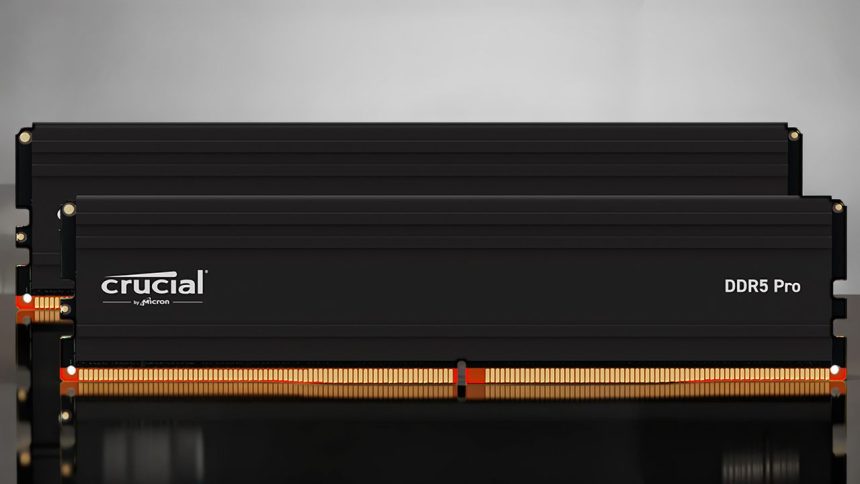
Micron has faced criticism over the handling of a Crucial memory warranty claim after a customer reportedly received an offer based on the RAM kit’s original purchase price rather than the substantially higher cost of obtaining an equivalent replacement in today’s market.
The case has attracted attention because Micron has exited the Crucial consumer business, changing the circumstances surrounding warranty replacements for customers who previously purchased Crucial-branded memory.
According to a report by Tom’s Hardware, the initial reimbursement offered for the affected Crucial RAM represented only around 37% of its current market value.
Micron subsequently changed course and offered what was described as a better solution for the customer.
Crucial’s Exit Creates a Complicated Warranty Situation
Crucial was Micron’s consumer-facing memory and storage brand, making it one of the most recognizable names in PC memory.
Its products included RAM kits and storage products sold directly to consumers and through retailers around the world.
Read More

Micron’s decision to exit the Crucial consumer market therefore created an important question for existing customers: what happens when a product covered by warranty fails but an equivalent Crucial replacement is no longer readily available?
The reported warranty case demonstrates how complicated that question can become when memory prices change substantially between the original purchase and the warranty claim.
Customer Files an RMA for Crucial RAM
The case centers on a Crucial memory owner who went through Micron’s warranty process after the Crucial brand’s exit from the consumer market.
Under a conventional RMA process, a manufacturer may replace a defective product with the same model or another product offering equivalent functionality.
That becomes more difficult when the manufacturer has stopped selling the relevant consumer product line.
A monetary reimbursement therefore becomes one possible alternative.
The problem in this case was the difference between the RAM’s original MSRP or purchase value and the amount required to buy an equivalent memory kit in the current market.
Initial Offer Was Based on Original MSRP
According to the report, Micron initially offered reimbursement based on the original MSRP of the Crucial memory.
Under normal market conditions, refunding the original purchase value could appear reasonable.
The unusual memory market, however, meant the same amount of money was no longer sufficient to obtain an equivalent replacement.
The report calculated that the proposed reimbursement represented approximately 37% of the RAM’s current market value.
That meant the customer could receive the original value of the product but still face a significantly higher expense to purchase comparable memory.
Why RAM Market Prices Matter
The dispute highlights an important distinction between refund value and replacement value.
A refund compensates a customer according to a predetermined monetary amount, which may be based on the original transaction.
Replacement value instead considers how much it costs to obtain an equivalent product at the time a warranty claim is resolved.
When prices remain relatively stable, the difference between the two may be small.
When RAM prices rise substantially, however, the gap can become significant.
A customer receiving the full original purchase price can therefore still end up unable to replace the failed hardware with an equivalent product.
Micron Later Changes Course
The situation did not end with the initial reimbursement proposal.
According to the report, Micron subsequently reversed course and provided a better solution.
That development is important because it demonstrates that the initial offer was not necessarily the final outcome of the warranty claim.
It also illustrates the challenges manufacturers can face when closing a consumer product business while warranty obligations for previously sold products remain active.
Crucial’s Consumer Exit Changes the RMA Equation
For an active product family, manufacturers can often resolve warranty claims by sending another unit from existing inventory.
Once a brand or product line has been discontinued, that option becomes increasingly difficult as remaining inventory declines.
Companies may instead need to offer comparable products, refunds, credits or other forms of compensation.
For customers, however, the practical value of those alternatives depends heavily on whether they can actually obtain an equivalent replacement.
The Crucial case therefore raises a broader question about how warranties should function when a manufacturer exits a market while the products it previously sold remain within their warranty periods.
Warranty Value Becomes More Important During Hardware Shortages
The issue is particularly significant in markets where component prices can change rapidly.
RAM and other semiconductor products are affected by manufacturing capacity, supply and demand, inventory cycles and demand from large computing markets.
A warranty policy based entirely on historical purchase prices may therefore produce very different results depending on market conditions when a failure occurs.
For consumers buying PC components with long warranty periods, the case demonstrates why the details of replacement and reimbursement policies can matter almost as much as the stated duration of the warranty.