


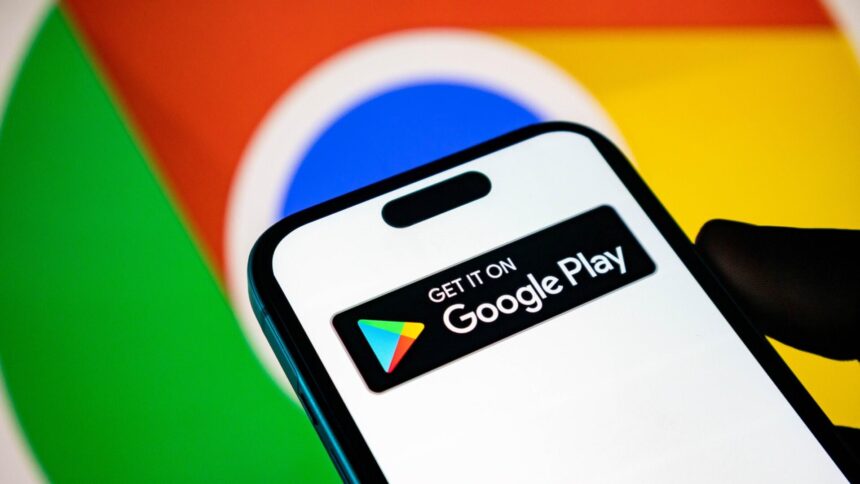
Google Play has begun distributing third-party Android app stores directly through the Play Store in the United States, marking a major change to an ecosystem that Google has tightly controlled for years.
- Google Play Can Now Install Another App Store
- Aptoide Games Is the First Store Available
- Third-Party Stores Will Not Appear Everywhere
- Google Still Applies Play Store Policies to the Store App
- Security Responsibilities Change After Users Enter Another Store
- The Change Follows the Epic Games Antitrust Battle
- Epic Games Did Not Become the First Store
- A Major Shift in Android App Distribution
- Competition Could Extend Beyond App Discovery
The change follows Google’s long-running court battle over competition in Android app distribution. Instead of requiring users to find a rival marketplace elsewhere on the web and manually install it, an eligible third-party store can now be discovered and installed through Google Play itself.
The rollout begins with Aptoide Games, a third-party marketplace focused primarily on games. Its arrival demonstrates how the new system works for Android users and provides the first practical example of a competing store being distributed through Google’s own storefront.
The change currently applies only in the United States.
Google Play Can Now Install Another App Store
Under the new system, a third-party marketplace can appear inside Google Play and be installed much like a conventional Android application.
Google says users can discover and download eligible third-party app stores through a dedicated Play Store landing page.
Read More

There are several ways to reach these stores, including direct deep links, the user’s Google Play account menu, the Apps category and Play Store search.
Users can, for example, search for an app store generally or search directly for the name of a particular marketplace.
This removes a major source of friction that previously separated mainstream Android users from alternative app distribution platforms.
Aptoide Games Is the First Store Available
The first third-party marketplace available through the new system is Aptoide Games.
Aptoide Games focuses largely on mobile games and includes both free and paid titles.
Installing the marketplace from Google Play works similarly to installing another Android application.
Once Aptoide Games is installed, users can browse its catalog and download games from the alternative marketplace.
9to5Google tested the process by downloading Clash of Kings through Aptoide.
The installation worked without additional security procedures beyond accepting Android’s normal Install prompt after the game had been downloaded.
This is significant because one of the biggest barriers to alternative Android stores has traditionally been the additional steps required to install software from outside Google Play.
Third-Party Stores Will Not Appear Everywhere
Although Google Play is now capable of distributing competing marketplaces, users should not expect rival stores to suddenly appear throughout the Play Store.
The implementation remains deliberately limited.
Third-party stores can be reached through specific discovery mechanisms such as direct links and searches rather than being displayed throughout every part of Google Play.
The feature is also currently limited to users in the United States.
This means the change is substantial from a platform-policy perspective, but its immediate impact will depend on how many competing stores participate and how easily users discover them.
Google Still Applies Play Store Policies to the Store App
Distribution through Google Play does not mean Google has abandoned oversight entirely.
Google says it enforces Play Store policies on third-party marketplace applications distributed through Google Play.
The important distinction is what happens after a user enters that external marketplace.
Google says it does not review every individual application available inside those third-party stores.
It also does not manage updates or payments for applications distributed through them.
Responsibility for those areas therefore moves away from Google Play and toward the operator of the alternative marketplace.
Security Responsibilities Change After Users Enter Another Store
The distinction creates an important change for Android users.
An alternative marketplace available through Google Play has passed requirements applicable to the marketplace application itself, but that does not mean Google has individually reviewed everything available inside it.
Users therefore need to distinguish between downloading a marketplace from Google Play and downloading applications from inside that marketplace.
Updates and transactions can also be handled by the third-party store rather than Google.
That gives competing marketplaces greater independence but also changes which company users rely on for application review, payments and ongoing software management.
The Change Follows the Epic Games Antitrust Battle
The opening of Google Play to rival app-store distribution follows years of litigation involving Epic Games and Google.
The dispute challenged Google’s control over Android app distribution and billing.
Court remedies required Google to permit third-party Android app stores to access parts of the Google Play ecosystem and to allow third-party Android app-distribution platforms or stores to be distributed through Google Play.
That requirement attacks one of the most important competitive advantages held by Google’s store: distribution.
Android has long technically supported installing applications from outside Google Play, but finding and installing another marketplace generally required users to leave the Play Store and complete additional steps.
Allowing rival stores inside Google Play substantially reduces that barrier.
Epic Games Did Not Become the First Store
Epic Games has spent years pushing for more open mobile app distribution, but Epic was not the first company to take advantage of the new Google Play distribution model.
Aptoide Games reached the Play Store first.
That does not diminish the importance of the Epic litigation, which helped drive the structural changes now affecting Google’s Android marketplace.
Instead, Aptoide’s arrival demonstrates that the consequences extend beyond Epic itself.
Other eligible marketplaces could potentially use the same distribution path, giving Android users a more direct way to install competing stores.
A Major Shift in Android App Distribution
Android has traditionally been described as more open than some competing mobile platforms because it permits sideloading and third-party stores.
In practice, however, Google Play’s enormous reach gave Google’s marketplace a major distribution advantage.
Most mainstream users obtain their applications from the store already installed on their Android device.
A competing marketplace that first requires users to visit a website, download an installation package, approve installation from another source and understand security warnings faces significantly more friction.
Placing alternative marketplaces inside Google Play changes that equation.
A user can now discover a participating rival store from a familiar interface and install it using a process that resembles installing a normal application.
Competition Could Extend Beyond App Discovery
The implications go beyond simply giving users another place to search for games and applications.
Third-party marketplaces can establish their own relationships with users, manage their own catalogs and handle their own payment systems.
They can also compete through pricing, developer terms, curation, promotions and other services.
Because Google does not manage payments or updates for applications distributed inside those stores, marketplace operators have more control over the customer relationship after installation.
For developers, broader competition among stores could eventually create additional distribution choices.
For users, it could mean more choice but also greater responsibility to understand which company is managing an application, its updates and its transactions.
The initial launch with Aptoide Games is therefore only the first visible implementation of a much larger change to Android app distribution in the United States.