




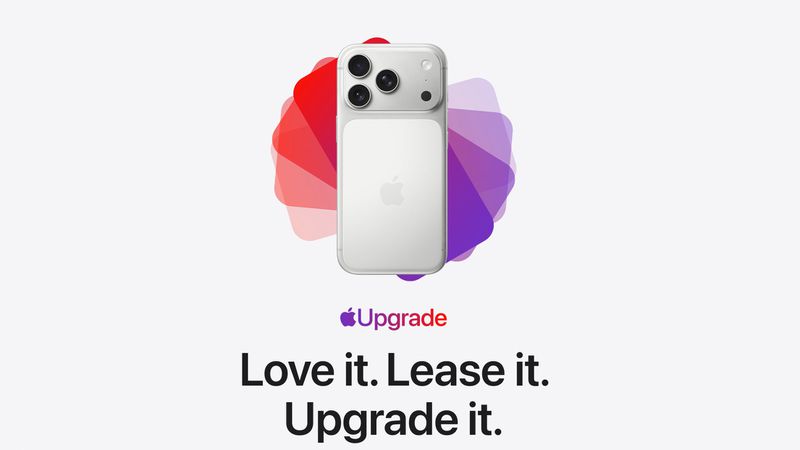
Apple reportedly considered taking much of the work out of setting up a replacement iPhone by delivering leased devices that had already been restored from the customer’s iCloud backup before they reached the user.
- Apple Upgrade Replaced Two Existing iPhone Programs
- Apple Considered a “White-Glove” Setup Experience
- New iPhone Setup Can Still Take Significant Time
- Technical Feasibility Was Reportedly Not the Problem
- Privacy Optics May Have Been the Deciding Factor
- Convenience and Privacy Can Pull in Opposite Directions
- Apple Upgrade Still Focuses on Device Leasing
- The Abandoned Idea Shows How Far Apple Considered Taking the Service
The idea was discussed as a possible “white-glove” feature for Apple Upgrade, the company’s recently launched device-leasing program in the United States. Under the concept, customers replacing an iPhone through the program could have received the new device with their personal data already transferred, potentially allowing them to begin using it almost immediately after opening the box.
The feature never progressed beyond the planning stage. According to Bloomberg’s Mark Gurman, the main concern was not whether Apple could technically make the system work. Instead, the company may have concluded that the privacy implications and the perception of receiving a device already loaded with personal account data could make some customers uncomfortable.
Apple Upgrade Replaced Two Existing iPhone Programs
Apple Upgrade launched in the United States on July 28, 2026.
The program replaced both the iPhone Upgrade Program and iPhone Payments, expanding the concept beyond the iPhone to cover several major Apple hardware categories.
Customers can use Apple Upgrade to lease an iPhone, iPad, Mac, or Apple Watch instead of purchasing the device outright or paying for it through a conventional installment plan.
Read More
The lease periods vary by product.
For iPhone and Apple Watch, Apple offers terms of 12 or 24 months. Mac and iPad leases run for 24 or 36 months.
When the lease term ends, customers have several options. They can return the device, pay the remaining balance and keep it, or move into a new lease by trading up to another device.
Apple Considered a “White-Glove” Setup Experience
When the broader Apple Upgrade concept was being discussed years earlier, Apple reportedly evaluated an additional service designed to make annual device replacement much more seamless.
The idea was for a replacement device to arrive at the customer’s home already prepared for use.
Instead of opening a new iPhone and beginning the usual restore process, the device would have been restored from the customer’s iCloud backup before shipment.
That could have meant the user’s data was already present when the box arrived.
For customers who regularly replace their phones, such a service could have removed one of the most time-consuming parts of moving to a new device.
The Apple Upgrade service that ultimately launched does not include this capability.
New iPhone Setup Can Still Take Significant Time
Migrating to a new iPhone is considerably easier than it was years ago, but it can still take time.
Users may need to activate the device, sign in to their Apple Account, restore information from iCloud, wait for applications to download, re-establish certain security settings, and allow photos, messages, documents, and other cloud-based data to synchronize.
The proposed Apple service would effectively have moved part of that process away from the customer.
A device could theoretically have arrived closer to a finished state, reducing the amount of setup required on the day it was delivered.
For an upgrade program based around regularly moving customers from one device to another, that kind of convenience could have become an important differentiator.
Technical Feasibility Was Reportedly Not the Problem
One of the more notable details in Gurman’s report is that technical limitations were apparently not what stopped Apple from pursuing the feature.
Apple already operates a large cloud infrastructure around iCloud backups and device restoration.
The company therefore appears to have believed it could build a process capable of preparing customer devices before delivery.
The bigger question was how customers would react to that process.
A new iPhone arriving with personal information already installed could immediately raise questions about when the data was restored, where the process took place, how long the information was present on the device before delivery, and whether anyone else could have accessed it.
Even if Apple designed a highly secure technical system, the perception of risk could still be significant.
Privacy Optics May Have Been the Deciding Factor
Apple has spent years positioning privacy as one of the central characteristics of its products and services.
That creates an unusually high standard for any service involving direct handling of customer information.
A pre-configured iPhone could be convenient, but it could also appear to place Apple more directly in the middle of the user’s personal data migration.
For some customers, receiving a sealed new phone and personally starting the restoration process provides a visible sense of control.
Receiving a phone on which personal account information has already been restored changes that experience.
Even if the underlying data-transfer process remained protected, customers could reasonably wonder who initiated the restoration and whether the device had been handled after personal information was installed.
According to Gurman, concerns around those privacy “optics” may have been enough for Apple to abandon the concept.
Convenience and Privacy Can Pull in Opposite Directions
The abandoned feature highlights a broader tension in consumer technology.
Many services become more convenient when companies perform more of the setup and configuration automatically.
Automatic account migration, cloud restoration, personalized recommendations, saved payment information, synced passwords, and device-to-device transfer all reduce friction for users.
At the same time, each additional automated process can make customers ask more questions about where their information is being processed and who has access to it.
Apple’s reported decision illustrates how a feature can be technically possible and potentially useful while still being considered undesirable because of the trust questions it creates.
Apple Upgrade Still Focuses on Device Leasing
Although the pre-configured-device idea was abandoned, Apple Upgrade itself has moved forward.
The program changes how customers can obtain major Apple products by presenting leasing as an alternative to outright ownership or traditional installment payments.
Its structure also gives Apple a more direct role throughout the hardware replacement cycle.
Customers can lease the device for the specified term and then decide whether to return it, pay off the remaining balance to keep it, or trade up into another lease.
The program extends that model beyond the iPhone to the iPad, Mac, and Apple Watch, making it a broader hardware-financing and replacement system across the Apple ecosystem.
The Abandoned Idea Shows How Far Apple Considered Taking the Service
The fact that Apple discussed restoring customer data before shipment shows that the company considered making Apple Upgrade more than a financing or leasing program.
The concept would have extended the service into device migration itself.
Instead of simply delivering a new piece of hardware, Apple would have taken responsibility for part of the transition between the old device and the new one.
That could have made upgrading significantly more convenient, especially for customers who replace devices frequently.
But it also would have pushed Apple deeper into a part of the user experience involving highly personal information.
The version of Apple Upgrade now available in the United States keeps that responsibility with the customer: Apple provides the leased hardware, while the user remains in control of restoring and configuring the new device.