




Honor Robot Phone Debuts with a 200MP Robotic Gimbal Camera Ahead of August 12 Launch
Honor has revealed additional details about the camera system of its upcoming Honor Robot Phone, ahead of the device’s official launch on August 12, 2026. The smartphone features a triple-camera setup, with its primary camera mounted on a compact robotic gimbal arm capable of extending outward from the body of the phone.
- How Honor Robot Phone Differs from Conventional Smartphones
- The Robotic Camera Arm Could Automatically Follow Users
- 200MP Main Camera with a Large Image Sensor
- A 200MP Sensor Doesn’t Automatically Mean Better Photos
- The Periscope Telephoto Camera Also Features a 200MP Sensor
- High Zoom Requires Exceptional Stabilization
- A 50MP Ultrawide Camera Completes the Triple-Camera System
- Yuguang H1 Is Dedicated to Camera Processing
- A Dedicated Imaging Processor Reduces the Workload on the Main Chip
- Honor Partners with ARRI to Bring Professional Cinema Color Science to Smartphones
- Log Video Is Designed for Serious Video Creators
- The Robotic Arm Introduces New Durability Challenges
- The Camera May Automatically Retract During a Drop
- Water and Dust Resistance Will Be More Difficult
- The Robotic Camera Requires Additional Power
- Privacy Must Be Carefully Designed Into the System
- Visible Camera Movement Can Improve User Awareness
- Launching on the Same Day as Google’s Pixel 11
- Global Availability Remains Unconfirmed
- A New Experiment in Smartphone Design
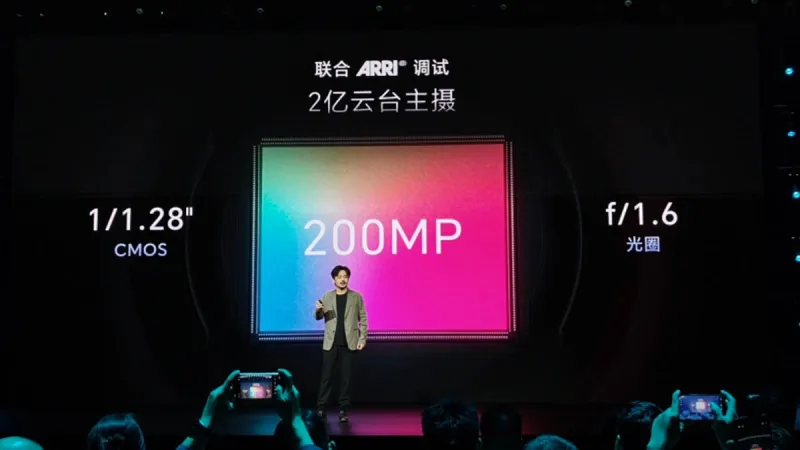
The movable main camera uses a 200-megapixel sensor measuring 1/1.28 inches with an f/1.6 aperture. The other two rear cameras remain fixed within the phone’s camera module, consisting of a 50MP ultrawide camera and a 200MP periscope telephoto camera.
Honor has also equipped the device with its in-house Yuguang H1 imaging processor, designed to handle computational photography tasks including subject tracking, image stabilization, AI-assisted image processing, and advanced color rendering.
The company has additionally announced a technical collaboration with ARRI, one of the world’s leading cinema camera manufacturers. The partnership brings elements of ARRI’s professional imaging workflow—including ARRI LogC3, ARRI Wide Gamut 3, and ARRI Looks—to the smartphone, giving creators greater flexibility during video color grading and post-production.
How Honor Robot Phone Differs from Conventional Smartphones
Most smartphones use fixed rear camera modules, meaning users must physically move the entire device whenever they want to change the framing, adjust composition, or follow a moving subject.
Honor takes a very different approach with the Robot Phone by mounting its primary camera on a miniature robotic arm capable of extending from the phone and physically changing its shooting angle.
Read More

Instead of requiring the user to reposition the entire device, the camera itself can rotate and tilt independently, allowing it to adjust framing while the phone remains stationary.
The concept is closer to a miniature AI-powered tracking gimbal than a conventional smartphone camera. It could automatically follow a person’s face, adjust framing during video recording, or keep subjects centered even while the device is resting on a desk or tripod.
The Robotic Camera Arm Could Automatically Follow Users
If the system performs as demonstrated in Honor’s earlier presentations, the robotic camera will be able to detect a person’s position and automatically reposition itself to keep the subject centered within the frame.
Such functionality could be particularly useful for solo video production, video calls, livestreaming, fitness instruction, product demonstrations, and content creation, eliminating the need for another person to hold the phone or for users to purchase a separate smartphone gimbal.
Honor’s AI system may also analyze scenes in real time and determine the most suitable framing automatically.
However, the company has yet to disclose several important technical details, including the robotic arm’s maximum range of motion, tracking speed, response latency, and how long continuous tracking can operate before significantly affecting battery life.
200MP Main Camera with a Large Image Sensor
The robotic camera module is equipped with a 200-megapixel sensor measuring 1/1.28 inches, paired with a bright f/1.6 aperture.
A larger image sensor combined with a wide aperture allows the camera to capture more light, making it better suited for indoor photography, low-light scenes, and video recording where faster shutter speeds help reduce motion blur.
The extremely high resolution also gives the system greater flexibility for image cropping and digital zoom while preserving more detail than lower-resolution sensors. However, actual image quality will still depend on the lens, pixel binning technology, optical stabilization, and Honor’s computational photography algorithms.
A 200MP Sensor Doesn’t Automatically Mean Better Photos
Megapixel count is only one factor that determines camera quality. A smartphone camera must also manage image noise, dynamic range, skin tones, motion, and edge sharpness.
Under low-light conditions, smartphones typically combine multiple pixels into larger virtual pixels through pixel binning instead of producing full 200MP images every time.
Honor will therefore need intelligent scene detection that automatically selects the appropriate shooting mode based on available light and subject movement. Capturing at the full 200MP resolution in poor lighting could actually produce noisier images than lower-resolution pixel-binned photos.
The Periscope Telephoto Camera Also Features a 200MP Sensor
In addition to its robotic primary camera, the Honor Robot Phone includes a 200MP Periscope Telephoto camera integrated into the phone’s main camera module.
Periscope cameras use prisms or mirrors to redirect light through a horizontally positioned lens assembly inside the device, allowing smartphones to achieve significantly longer optical zoom without requiring an excessively thick camera bump.
The high-resolution sensor may also enable multiple zoom levels through sensor cropping while maintaining image detail. However, Honor has not yet disclosed the camera’s actual optical zoom range or its full-frame focal length equivalent.
High Zoom Requires Exceptional Stabilization
Telephoto photography magnifies even the slightest hand movement, making image stabilization essential at longer focal lengths.
To address this, the camera system must combine Optical Image Stabilization (OIS) with multi-frame computational processing to minimize shake and maintain image quality.
Honor may also combine data from the robotic main camera, motion sensors, and the periscope camera itself to improve subject tracking, stabilize framing, and intelligently switch between cameras depending on the selected zoom level.
A 50MP Ultrawide Camera Completes the Triple-Camera System
The third rear camera is a 50MP ultrawide camera, designed for landscape photography, architecture, group photos, and indoor scenes where a wider field of view is beneficial.
Honor has not yet disclosed the sensor size, aperture, or viewing angle, but a 50MP ultrawide camera is consistent with the specifications found in many current flagship Android smartphones.
One of the biggest challenges for ultrawide cameras is maintaining image sharpness and color consistency with the primary camera, particularly around the edges of the frame where distortion and detail loss are more likely to occur.
Yuguang H1 Is Dedicated to Camera Processing
Honor has confirmed that the Robot Phone will feature its custom Honor Yuguang H1 imaging processor, working alongside the smartphone’s primary application processor.
A dedicated imaging chip can accelerate data processing from multiple cameras simultaneously, reduce image processing latency, and enable the robotic arm to respond more quickly to moving subjects.
Tasks such as face detection, subject tracking, and real-time image stabilization must all operate with extremely low latency. If processing delays become noticeable, the robotic camera may struggle to keep subjects centered or produce videos that appear unnatural.
A Dedicated Imaging Processor Reduces the Workload on the Main Chip
Separating imaging workloads from the primary CPU and GPU allows the system to improve efficiency while managing power consumption more effectively.
Even so, the Robot Phone must still deal with the heat generated by its high-resolution image sensors, dedicated imaging processor, AI workloads, and robotic camera motors simultaneously—especially during extended high-resolution video recording sessions.
Efficient thermal management will therefore be just as important as raw camera performance.
Honor Partners with ARRI to Bring Professional Cinema Color Science to Smartphones
Honor has announced a technical partnership with ARRI, one of the world’s most respected cinema camera manufacturers, to bring elements of professional filmmaking workflows to the Robot Phone.
The collaboration includes support for ARRI LogC3, which captures footage using a logarithmic gamma curve that preserves significantly more highlight and shadow detail, along with ARRI Wide Gamut 3, providing a substantially wider color space than conventional smartphone video.
Users will also be able to import footage into professional editing software for advanced color grading or apply ARRI Looks, a collection of professionally designed color profiles inspired by ARRI’s cinematic imaging pipeline.
Log Video Is Designed for Serious Video Creators
Recording in Log format typically produces footage with a flat appearance, low contrast, and muted colors when viewed without color correction. However, it preserves significantly more image data for color grading than videos processed directly by the camera.
This gives creators much greater control over skin tones, lighting, contrast, and the overall visual mood, while making it easier to match footage captured with multiple cameras in the same production.
Honor still needs to disclose several important recording specifications, including supported resolutions, frame rates, bit depth, and codecs. Simply advertising Log recording does not automatically guarantee that the camera meets the requirements of professional filmmaking workflows.
The Robotic Arm Introduces New Durability Challenges
Adding a moving mechanical component makes the Robot Phone considerably more complex than a conventional smartphone.
The robotic arm must withstand thousands of extension and retraction cycles while also resisting impacts, dust, moisture, and accidental drops without affecting camera alignment or damaging the motor.
If the phone is dropped while the robotic arm is extended, the camera could become significantly more vulnerable than a traditional fixed camera module.
The Camera May Automatically Retract During a Drop
Some smartphones with pop-up selfie cameras previously included fall-detection systems that automatically retracted the camera before impact.
Honor could implement a similar protection mechanism for the robotic camera arm.
However, the system would need to react within a fraction of a second, and even then it would not be able to prevent damage from every angle or every type of impact.
Water and Dust Resistance Will Be More Difficult
A moving robotic arm requires an opening in the phone’s chassis, making waterproof sealing considerably more complicated than on conventional smartphones.
Dust, sand, or small debris could enter the mechanism, potentially affecting its movement or damaging internal components over time.
Honor has not yet announced the Robot Phone’s official IP rating, meaning users will have to wait before knowing whether it offers water and dust resistance comparable to today’s flagship smartphones.
The Robotic Camera Requires Additional Power
The motors responsible for rotating and repositioning the robotic camera consume battery power, while AI subject tracking requires the camera system and image processing hardware to operate continuously.
As a result, AI tracking during video recording is likely to consume more power than conventional fixed-camera recording, even with the dedicated Yuguang H1 imaging processor improving efficiency.
Honor will need to clarify whether the robotic arm remains active throughout video recording or only when users enable a dedicated Robot Camera Mode, helping avoid unnecessary battery drain.
Privacy Must Be Carefully Designed Into the System
A camera capable of automatically rotating and tracking people naturally raises privacy concerns, especially when the phone is placed inside homes, meeting rooms, classrooms, or other public environments.
Honor should provide clear physical indicators—such as a visible status light—or obvious on-screen notifications whenever the robotic camera is active.
There should also be an easily accessible control allowing users to immediately disable subject tracking whenever they choose.
Furthermore, applications should never be allowed to activate the robotic arm or record video in the background without explicit, visible user permission.
Visible Camera Movement Can Improve User Awareness
One advantage of a robotic camera is that users can clearly see where the lens is pointing, unlike conventional fixed camera modules.
However, Honor must also ensure that applications cannot secretly switch to one of the other built-in cameras without appropriate visual indicators.
The entire system should continue to follow Android’s camera permission model strictly so users always know when any camera is actively recording.
Launching on the Same Day as Google’s Pixel 11
Honor has confirmed that the Robot Phone will officially launch on August 12, 2026—the same day Google is expected to unveil the Pixel 11 series.
That scheduling means the Robot Phone will compete directly with Google’s flagship launch for media attention and consumer interest, even if Honor initially limits availability to selected markets.
While the Pixel 11 is expected to emphasize computational photography and AI-powered software features, Honor is taking a fundamentally different approach by using innovative mechanical camera hardware as its primary differentiator.
Global Availability Remains Unconfirmed
According to 9to5Google, Honor has not yet announced a global release schedule for the Robot Phone, and the August 12 event is expected to focus primarily on the Chinese market.
Pricing, international availability, operating system details, and after-sales support therefore remain unknown and will likely be announced at a later date.
A New Experiment in Smartphone Design
Over the past several years, most smartphones have evolved toward similar hardware designs, with manufacturers competing primarily through processors, camera quality, and software features.
The Honor Robot Phone challenges that trend by introducing a movable robotic camera that changes how a smartphone observes and responds to its surroundings without requiring users to constantly reposition the device themselves.
If the system performs well in real-world use, the concept could eventually influence video calls, online meetings, content creation, AI assistants, and other scenarios where automatic subject awareness provides genuine value.
On the other hand, if the robotic mechanism proves fragile, significantly reduces battery life, or adds too much to the device’s cost, the Robot Phone could remain a niche experimental product rather than redefining the future of smartphone design.
Honor is expected to reveal the Robot Phone in full on August 12, 2026. The most important details still awaiting confirmation include the robotic arm’s range of motion, long-term durability, water and dust resistance, battery life, Log video capabilities, and final pricing. Those specifications will ultimately determine whether Honor’s robotic camera represents a genuinely practical innovation or simply an attention-grabbing feature designed for launch day.