





Are CAPTCHAs Secretly Training Google’s AI? Here’s What We Know
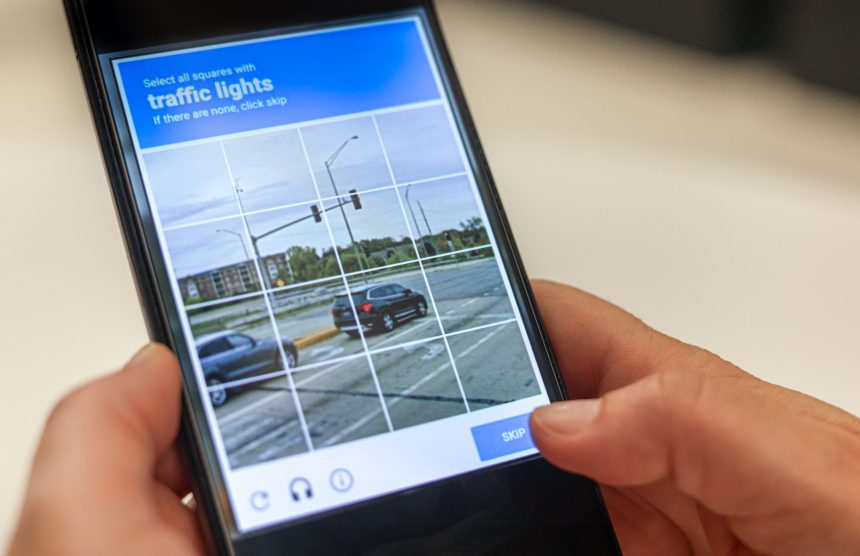
Every internet user has encountered a CAPTCHA at some point—selecting all the images containing traffic lights, bicycles, buses, or crosswalks before accessing a website. The purpose seems simple: prove you’re human instead of a bot.
But over the past few months, a renewed debate has spread across social media and technology circles. Many users have questioned whether solving CAPTCHAs has actually been helping Google train its artificial intelligence systems without people realizing it.
The discussion intensified after changes to Google’s reCAPTCHA privacy terms and renewed attention to how earlier versions of the service were designed. While Google says modern reCAPTCHA no longer uses challenge responses to train AI models, experts note that the history of the technology is more complicated than many people realize.
CAPTCHA Was Built for Two Purposes
When Luis von Ahn created reCAPTCHA in the early 2000s, it wasn’t designed solely to stop automated bots.
Read More

The original system also asked users to identify words that optical character recognition software struggled to read. Millions of people unknowingly helped digitize books and newspapers simply by completing security checks.
Google acquired reCAPTCHA in 2009 and expanded the concept. Instead of recognizing distorted words, users increasingly identified objects such as buses, traffic lights, bicycles, storefronts and crosswalks.
Those human-labeled images became extremely valuable datasets for machine learning and computer vision research.
Why Human Labels Matter for AI
Modern AI systems require enormous quantities of accurately labeled data.
If thousands of people independently identify the same blurry image as a bus, traffic light, or motorcycle, the resulting dataset becomes highly reliable for training computer vision models.
Experts say this type of human verification is especially useful because it includes difficult real-world conditions such as:
Rain
Fog
Motion blur
Partial obstruction
Poor lighting
Unusual camera angles
These situations are exactly the kinds of scenarios autonomous driving systems and visual AI models must learn to recognize.
Did Google Actually Use CAPTCHA Data?
The short answer is yes—but mostly in earlier versions of reCAPTCHA.
For years Google openly acknowledged that CAPTCHA responses helped improve machine learning systems. Earlier versions of the official reCAPTCHA website even used the slogan:
“Stop a bot. Build a bot.”
Google has since removed that wording.
According to the company, the launch of reCAPTCHA v3 in 2018 marked a major change. Google says it no longer uses responses from visual CAPTCHA challenges to train AI models and instead collects data primarily to improve fraud detection and website security.
Why Some Experts Remain Skeptical
Although Google states that modern reCAPTCHA is no longer used for AI training, researchers say several questions remain.
Many websites still rely on older CAPTCHA implementations that predate reCAPTCHA v3.
Researchers have also pointed to earlier academic studies suggesting that image-selection challenges provided valuable labeled datasets for Google’s computer vision research.
Privacy regulators in Europe have likewise questioned whether users clearly understand how CAPTCHA-generated data may be processed.
Google’s Privacy Changes Added More Questions
Earlier this year Google changed its role within reCAPTCHA from data controller to data processor for many business customers.
That means websites using reCAPTCHA now bear greater responsibility for determining how visitor data is handled, while Google processes information on their behalf under Google Cloud terms.
Privacy specialists say the change clarifies legal responsibilities but has also fueled renewed discussion about transparency and consent.
CAPTCHAs Are Becoming Less Important
Ironically, AI itself is making traditional CAPTCHAs less effective.
Modern large language models and computer vision systems can now solve many image-based challenges that once confused automated bots.
As a result, websites increasingly rely on invisible behavioral analysis—including mouse movement, browser fingerprints, typing patterns, device reputation and risk scoring—instead of forcing users to identify images.
The Bigger Picture
Whether or not today’s CAPTCHAs actively train Google’s AI, one fact is clear: human-generated labels have played a major role in the evolution of modern machine learning.
Earlier generations of reCAPTCHA unquestionably helped produce valuable labeled datasets. Google maintains that this practice changed with reCAPTCHA v3, but discussions about transparency, privacy and informed consent continue among researchers and regulators.
As AI systems become more capable, traditional CAPTCHAs may gradually disappear. Future anti-bot systems are expected to rely far more on passive behavioral analysis than on asking users to identify buses or traffic lights—bringing an end to one of the internet’s most familiar security tests.