




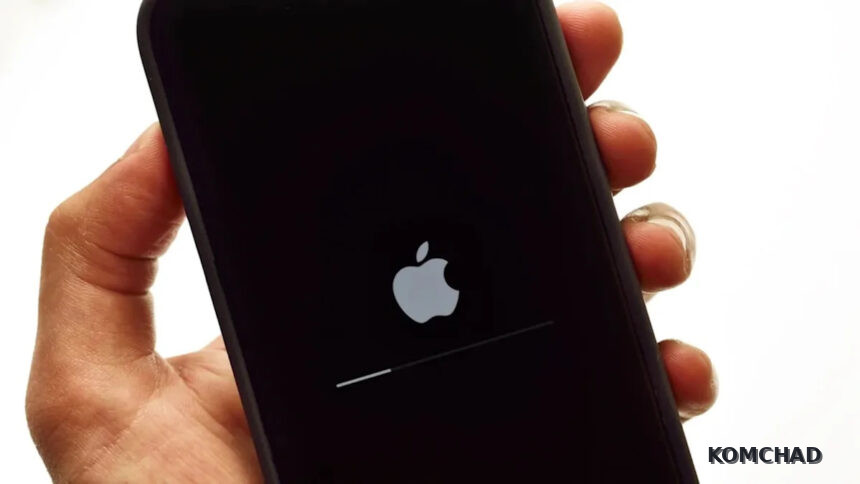
Apple warns users across 110 countries after detecting targeted spyware activity
Apple has sent a fresh round of threat notifications to users in 110 countries after detecting activity that it believes may be linked to highly targeted mercenary spyware attacks. The scale is notable because these campaigns are normally aimed at a relatively small number of people rather than the broader public.
- Apple warns users across 110 countries after detecting targeted spyware activity
- The alert is serious, but it does not mean the iPhone has already been hacked
- Lockdown Mode is the strongest immediate defense Apple recommends
- A spyware warning should trigger a wider security check, not just one setting
- Mercenary spyware is dangerous because a phone can expose an entire private life
- One Apple notification can become the first clue to a much larger surveillance campaign
Apple has issued this type of warning several times a year since 2021. Across those campaigns, the company says users in more than 150 countries have been notified. The latest wave therefore does not represent a new category of threat, but it does show how widely sophisticated commercial surveillance operations can reach when several campaigns are considered together.
Unlike ordinary malicious software that may be distributed indiscriminately, mercenary spyware is typically built for carefully selected targets. Apple describes these operations as exceptionally well resourced. Historically, commercial surveillance tools have been associated with attempts to monitor journalists, activists, politicians, diplomats and other people whose communications or access may be valuable to an attacker.
The alert is serious, but it does not mean the iPhone has already been hacked
An Apple threat notification should not be interpreted as confirmation that an attacker successfully compromised the device. Apple says the warning instead represents a high-confidence indication that a particular user was targeted. That distinction is important: a recipient may still have an opportunity to harden the device before an attack succeeds or to obtain expert help while investigators examine what happened.
The notification experience has also become more visible. In addition to account and email warnings, Apple now surfaces notices on the Lock Screen and in Settings, making it harder for a recipient to overlook a warning and easier to reach the recommended security guidance.
The message reported in coverage tells recipients that Apple detected a mercenary spyware attack targeting their iPhone and that steps can be taken immediately to protect the device and data. Apple also stresses that these attacks can cost millions of dollars and often have a short operational life, characteristics that make them difficult to detect and prevent.
Read More
Lockdown Mode is the strongest immediate defense Apple recommends
Apple’s central recommendation for people who receive a genuine warning is to enable Lockdown Mode. The feature is designed for the small number of users who face unusually sophisticated digital threats and deliberately trades some convenience for a smaller attack surface.
Rather than functioning like a conventional antivirus scanner, Lockdown Mode restricts technologies and interactions that advanced exploits may abuse. That makes it especially relevant when the threat is not a mass-market scam but a carefully engineered attack against one person.
What Lockdown Mode restricts
Among the protections described by Apple are restrictions on most message attachment types, tighter controls around FaceTime calls from people the user has not previously contacted, and limitations on certain web technologies that could otherwise provide an avenue for exploitation.
Those restrictions can change how some websites, messages or communication features behave. For an average user they may feel unnecessary, but for someone who has received a high-confidence spyware warning the trade-off is fundamentally different: reducing functionality can be worthwhile if it removes opportunities for an attacker.
A spyware warning should trigger a wider security check, not just one setting
Lockdown Mode is only one part of the response. Apple recommends bringing every affected device up to the latest software version so that current security fixes are installed. Devices should be protected with a passcode and biometric authentication such as Face ID or Touch ID, while the Apple Account should use two-factor authentication and a strong password.
On supported iPhones, Stolen Device Protection adds another layer against account takeover and sensitive security changes. Users should install software only from trusted sources, use strong and unique passwords—or passkeys where available—and be particularly cautious with unexpected links and attachments.
For people who have actually been selected for a sophisticated surveillance operation, ordinary consumer troubleshooting may not be enough. Apple specifically directs notified users toward expert assistance, including Access Now’s Digital Security Helpline, which offers rapid-response support for people and organizations facing digital threats.
Why expert help matters
Access Now told TechCrunch that outreach following the alerts was running roughly 30% to 40% above its usual post-notification level. That increase illustrates an important consequence of making the warnings more prominent: more recipients may recognize that the alert requires action and seek qualified assistance instead of treating it as a generic security message.
Specialists can help a targeted person preserve evidence, review account and device security, assess whether other devices or contacts may also be exposed, and determine whether the incident belongs to a broader campaign.
Mercenary spyware is dangerous because a phone can expose an entire private life
A successful spyware compromise can provide access to some of the most sensitive information a person carries: photographs, documents, private conversations and other personal or professional material. Modern phones are not merely communication devices; for many people they are identity stores, workstations, cameras, financial tools and archives of years of private activity.
That concentration of information is precisely why sophisticated surveillance software is so valuable. An attacker who compromises the right device may gain insight not only into the target but also into colleagues, sources, family members and organizations connected to that person.
The risk therefore extends beyond whether one iPhone continues to function normally. A device can appear usable while the information it contains has enormous intelligence value to whoever is conducting the surveillance.
One Apple notification can become the first clue to a much larger surveillance campaign
Researchers have repeatedly used targeted-user warnings as starting points for deeper investigations. When a recipient seeks expert help, forensic analysis may reveal infrastructure, exploit traces or patterns that connect the incident to other victims.
Citizen Lab senior researcher John Scott-Railton has emphasized the value of Lockdown Mode and of getting targeted users into contact with researchers. A warning delivered to one person can ultimately help investigators identify additional targets and understand how a commercial spyware campaign is operating.
For most Apple customers, mercenary spyware remains an uncommon threat. But that should not reduce the significance of a genuine notification. Anyone who receives one should verify it through official Apple channels, strengthen the security of the device and account immediately, and seek expert help when the circumstances warrant it.